Why Whole Eye Measurement Matters in LASIK Planning
MBBS, MS (Ophthalmology), Fellowship in Phaco & Refractive Surgery · The Healing Touch Super Speciality Eye Care, New Delhi — Vikaspuri · Janakpuri
When researching advanced LASIK options, most patients focus on their spectacle number or corneal shape. But to truly personalise laser vision correction, it’s essential to understand how light travels through your entire eye—not just the front surface.
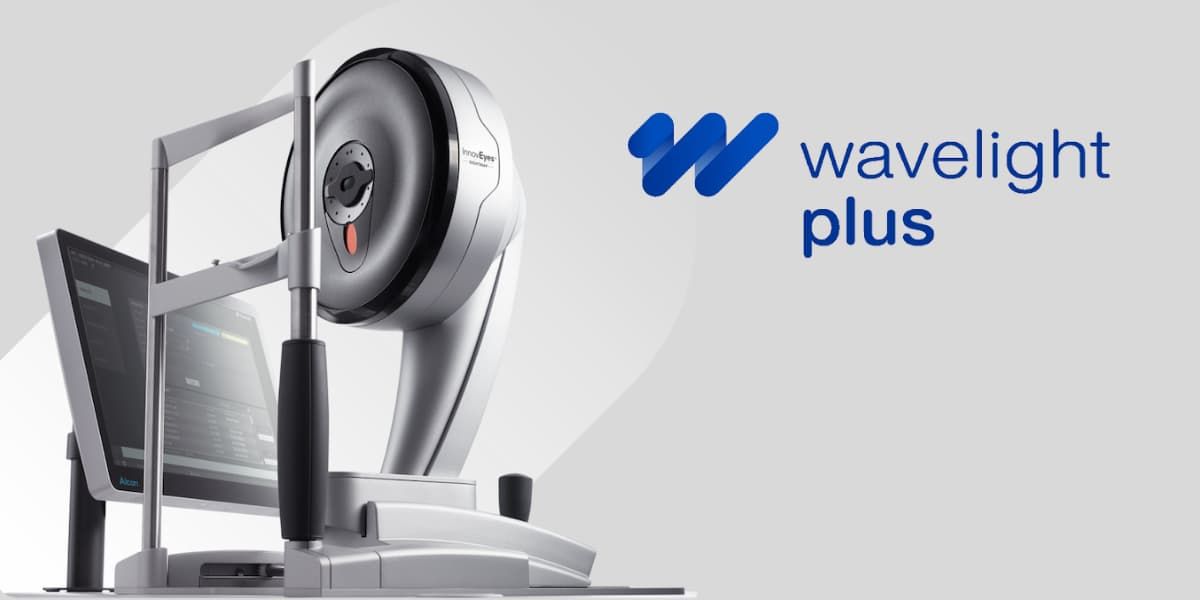
At Centre for Lasik, WaveLight Plus InnovEyes uses whole-eye measurement to capture the full optical picture: from the front and back of the cornea, through the lens, and back to the retina. This approach goes far beyond cornea-only scans or adjusting based on glasses prescription alone. If you want an in-depth, science-driven understanding of LASIK planning, this page explains how whole-eye scanning—including axial length measurement—can make a difference for Indian eyes.
Cornea-Only vs Whole-Eye Data: What’s the Difference?
Traditional LASIK planning relies mainly on corneal topography—mapping the front surface of the eye. While this gives valuable information, it leaves out how the rest of your eye’s optical system bends and focuses light. For some patients, especially those with complex prescriptions or unique eye shapes, this limited data may miss subtle factors that affect vision quality after surgery.
Whole-eye measurement includes:
- The anterior cornea (front)
- The posterior cornea (back surface)
- The crystalline lens (inside the eye)
- The axial length (distance from cornea to retina)
Why does this matter? Imagine two patients in Mumbai and Bangalore with similar spectacle numbers, but one has a slightly shorter eye and a steeper posterior cornea. Standard corneal scans would treat them the same, but whole-eye data reveals these differences, allowing the surgeon to tailor the treatment more precisely. This is especially important in cases of high myopia or unusual corneal shapes, where ignoring the lens or axial length could lead to less predictable outcomes.
How Light Travels: The Complete Optical Pathway
Vision is not just about the cornea—it's about how light passes through every part of your eye and lands on the retina. When you look at an object, light travels through the cornea, aqueous fluid, lens, and vitreous before focusing at the retina. Any irregularity or unique feature along this path can influence your spectacle number and the clarity of your vision.
Axial length—the distance from the front of the cornea to the retina—is a major factor. For example, a teenager in Delhi with very long eyes (high myopia) will have a different focal point than someone with average eye length. Also, the lens inside the eye can subtly tilt or curve, creating optical aberrations that ordinary corneal scans miss. Whole eye measurement LASIK takes these factors into account, giving a more realistic model of how your eye actually works. This helps create a “Digital Eye Twin”—a virtual replica of your eye used to plan your customised treatment.
WaveLight Plus InnovEyes: Instruments Used for Whole Eye Scans
The WaveLight Plus InnovEyes system integrates several advanced diagnostic instruments to capture whole-eye data:
- Scheimpflug camera: Maps both anterior and posterior corneal surfaces in high detail.
- Optical biometer: Measures axial length, anterior chamber depth, and lens thickness—key for understanding eye size and shape.
- Wavefront aberrometer: Detects subtle optical imperfections (aberrations) across the entire eye, not just the cornea.
During your free Advanced Eye Mapping session, these painless scans build a detailed 3D model of your eye. For example, a Hyderabad office worker with mild astigmatism and early lens changes would benefit from this approach, as it considers both corneal shape and lens irregularities. The data is then used in ray-tracing algorithms, which simulate how light travels through your unique optical system. This helps plan a LASIK procedure tailored to your eyes, rather than a “one-size-fits-all” correction.
Why Axial Length Matters in LASIK Planning
Axial length is the measurement from the front of your eye to the retina, typically ranging from about 22mm to 26mm in most Indian adults. In highly myopic patients or those with unusual eye sizes, even small differences in axial length can affect where light comes to focus—impacting the final visual result.
If only the cornea is measured, the LASIK plan might correct the prescription as it appears in your glasses, but not as it behaves inside your actual eye. For instance, a Chennai student with a long axial length and a slightly tilted lens might see better with a plan customised to these parameters.
By incorporating axial length in LASIK planning, WaveLight Plus InnovEyes aims to reduce “refractive surprises” and offer a more predictable result. However, not all patients are candidates for this approach; eligibility depends on a full eye health assessment, including corneal thickness, eye surface health, and prescription stability. Learn more about eligibility for WaveLight Plus InnovEyes.
When Whole Eye Measurement Makes a Difference
Whole eye measurement is especially useful for:
- Patients with high myopia or hyperopia (very strong spectacle numbers)
- Those with unusual astigmatism or irregular corneas
- People with early lens changes (common after age 35–40)
- Patients who had variable vision with their glasses or contact lenses
For example, an IT professional in Pune who feels their vision clarity fluctuates—even with new specs—might have subtle lens tilt or higher-order aberrations. A traditional LASIK plan using only corneal data could overlook this. In contrast, a whole eye scan and ray-tracing plan can identify these factors, offering a more individualised correction. It’s not about "better for everyone", but about matching the technology to your eye’s specific needs. Alternative procedures like SMILE, SILK, or ICL may be preferable in some cases, depending on occupation, corneal health, and lifestyle—your surgeon will discuss all options during the consultation.
The Centre for Lasik Approach: Personalisation and Next Steps
At Centre for Lasik, we believe your spectacle number is only one part of your vision. WaveLight Plus InnovEyes combines whole-eye measurement, advanced ray-tracing, and the creation of your Digital Eye Twin to personalise your treatment plan. The all-inclusive price is ₹49,999 per eye (₹99,998 for both), with no-cost EMI starting from ₹4,167/month and a free Advanced Eye Mapping session.
Your detailed evaluation includes:
- Comprehensive scans (cornea, lens, axial length)
- Surgeon-led eligibility check
- Honest discussion of alternatives and risks, including suitability for regulated professions (aviation, defence, police—rules change, please verify current standards)
Not every patient is a candidate for every technology. But if you value data-driven personalisation and want to know exactly how your eyes are measured, book your free, no-obligation assessment today. For a side-by-side view of all laser options, see our procedure comparison.
Frequently Asked Questions
Ready to Explore Personalised LASIK?
Find out if WaveLight Plus InnovEyes and whole eye measurement LASIK are suitable for your eyes. Start with a free, no-obligation Advanced Eye Mapping session.
+91-96677 70450Related Reading
Am I Eligible for WaveLight Plus InnovEyes? Full Candidacy Checklist
Find out if you are eligible for WaveLight Plus. Explore key criteria like age, prescription, and cornea health in this comprehensive eligibility guide.
Read more Honest ComparisonsWaveLight Plus vs LASIK: What Sets Them Apart?
Explore the difference between WaveLight Plus and LASIK. Learn how WaveLight Plus uses advanced eye mapping for personalised treatment. Compare now.
Read more Technology ExplainedAdvanced Eye Mapping: The Complete LASIK Eye Test Before Surgery
Discover what advanced eye mapping includes, why it's crucial before LASIK, and how your free assessment at Centre for Lasik determines suitability.
Read more Technology ExplainedWavefront vs Topography Guided vs Ray Tracing LASIK: Which Customization Suits You?
Compare wavefront, topography guided, and ray tracing LASIK. Learn how each method customizes vision correction and which is best for your eyes.
Read more Technology ExplainedUnderstanding Your InnovEyes Sightmap Eye Scan
Discover how the InnovEyes Sightmap eye scan maps your entire optical system in one sitting. Learn what to expect and how results guide treatment planning.
Read more Technology ExplainedPersonalized Laser Vision Correction: From Standard to Ray-Traced Planning
Discover personalized laser vision correction options in India. Learn about standard, wavefront, topography-guided, and ray-traced treatments.
Read more