Wavefront vs Topography Guided vs Ray Tracing LASIK: Which Customization Suits You?
MBBS, MS (Ophthalmology), Fellowship in Phaco & Refractive Surgery · The Healing Touch Super Speciality Eye Care, New Delhi — Vikaspuri · Janakpuri
If you've started researching laser vision correction in India, you've probably noticed terms like "wavefront LASIK", "topography guided LASIK" (including Contoura), and now "ray tracing" on platforms like WaveLight Plus InnovEyes. These aren't just buzzwords—each represents a different approach to customizing your laser treatment, using unique measurement technologies and planning methods.
But what do these terms actually mean for your eyes, your vision, and your choices? On this page, you'll discover how each method works, what data they use, when they may be recommended, and what real differences Indian patients might experience. We’ll also help you understand why suitability is always determined by a detailed eye assessment—not just by your spectacle number or preference.
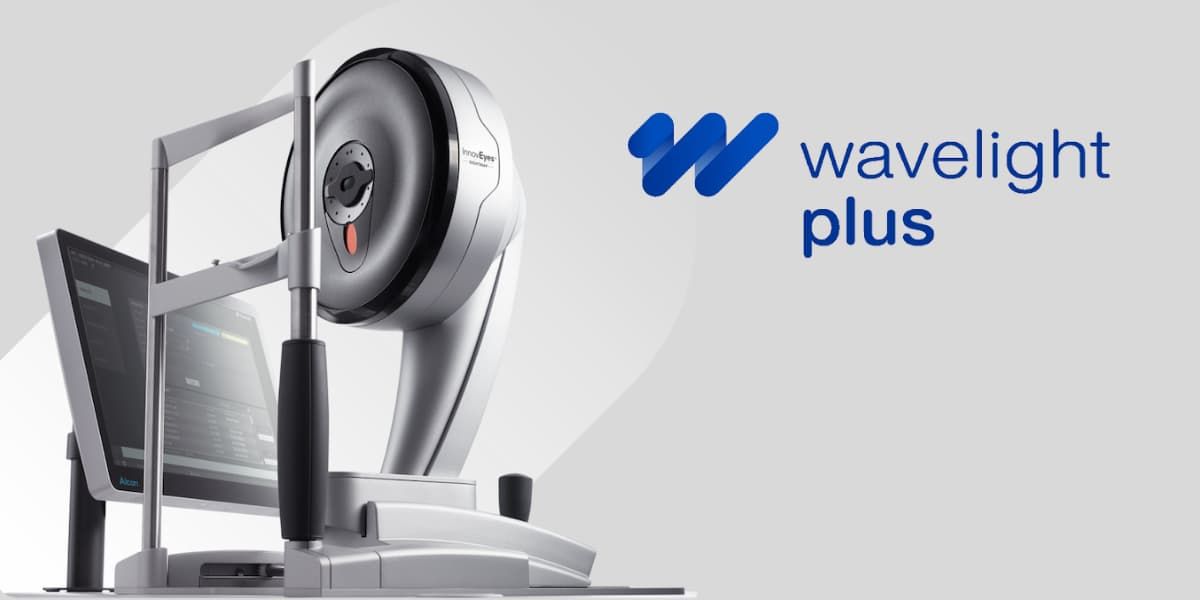
How Laser Eye Surgery Customizes Your Treatment
Laser vision correction isn’t a one-size-fits-all process. Your eye’s optical system is unique, shaped by your cornea, lens, and even the way light passes through your entire eye. Modern LASIK technologies use sophisticated diagnostics to map these features, aiming to personalise your treatment beyond simply correcting your spectacle number.
Most patients are familiar with "conventional" or "standard" LASIK, which mainly corrects sphere and cylinder based on your glasses prescription. The advanced technologies we’re comparing here—wavefront, topography guided, and ray tracing—go several steps further. They each use different methods to capture information about the eye, and each has specific use-cases depending on your eye health, occupation, and personal visual goals. This is why a detailed evaluation at a centre like the Centre for Lasik is key before making your decision.
| Aspect | Wavefront LASIK | Topography Guided LASIK (Contoura) | Ray Tracing LASIK (WaveLight Plus InnovEyes) |
|---|---|---|---|
| Data Captured | Wavefront aberrometry (whole-eye optical errors) | Corneal surface topography (shape map) | Corneal tomography, aberrometry, and lens data (Digital Eye Twin) |
| Planning Method | Treats measured higher-order aberrations (HOAs) | Smooths corneal irregularities + prescription | Simulates light passage through entire eye for personalized plan |
| Focus Area | Whole optical system, mostly cornea and lens | Corneal surface only | Whole optical system (cornea + internal lens) |
| Suitable For | Healthy corneas, seeking improved night/contrast vision | Mild corneal irregularity, early irregular astigmatism | Patients desiring highest personalization, complex optics |
| Availability in India | Major metro cities, many centres | Widely available, especially metros | Limited to select centres with WaveLight Plus |
| Typical Use-case | Quality of vision, reduced halos/glare | Irregular corneal surface, previous corneal procedures | Complex prescriptions, subtle visual complaints, high customization |
| Pricing (indicative) | ₹35,000–₹65,000 per eye (varies by centre) | ₹45,000–₹85,000 per eye (varies by centre) | ₹49,999 per eye all-inclusive (Centre for Lasik, India) |
| Pre-op Diagnostics | Wavefront scan, standard mapping | Corneal topography scan | Advanced Eye Mapping: corneal, wavefront, lens, and axial data |
| Limitations | Less effective for highly irregular corneas | Cannot address internal eye aberrations | Availability; requires precise scans, not for all |
Wavefront LASIK: Measuring Visual Aberrations
Wavefront-guided LASIK is designed to assess and correct optical imperfections in your entire optical system, not just your spectacle number. It uses a wavefront aberrometer—a device that shines a safe light into your eye and measures how the light waves come out, capturing details about higher-order aberrations (small, subtle distortions that can affect night vision, glare, and contrast sensitivity).
There are two main types: wavefront-optimized (which uses population averages to reduce new aberrations during treatment) and wavefront-guided (which creates a treatment based on your unique wavefront map). While these approaches can improve the quality of vision for many patients, they’re not suitable for everyone. For example, patients with very irregular corneas, scars, or certain corneal disorders may not be ideal candidates. In India, wavefront technologies are available in major cities, with pricing and platform options varying between clinics.
Topography Guided LASIK and Contoura Vision: Mapping the Cornea
Topography guided LASIK—including Contoura Vision—focuses on mapping the front surface of your cornea in remarkable detail. A corneal topographer takes thousands of point measurements, creating a high-resolution map. This map is used to plan a treatment that smooths out subtle surface irregularities and corrects your refractive error simultaneously.
This approach is especially helpful for patients with mild corneal irregularities or those who have had previous corneal procedures. Topography guided treatments like Contoura are widely offered in India, particularly in metro cities, and are sometimes marketed for their potential to improve visual clarity or reduce glare and halos. However, outcomes can vary, and not all eyes are suited for this technique—especially if the irregularity extends beyond the corneal surface or if tear film instability affects mapping accuracy.
Ray Tracing LASIK: The WaveLight Plus InnovEyes Approach
Ray tracing LASIK, as used in the WaveLight Plus InnovEyes platform, represents the latest tier of personalization. Instead of focusing on just the cornea or wavefront data, it combines multiple measurement technologies—including detailed corneal tomography, aberrometry, and lens data—to create a "Digital Eye Twin" or virtual model of your whole optical system.
This model simulates how light rays travel through your unique eye, including subtle lens effects and higher-order aberrations from both cornea and lens. By using this detailed simulation, the treatment is planned with the goal of reducing optical imperfections across the entire visual pathway. Indian patients benefit from a free Advanced Eye Mapping session, which is painless and non-contact, to determine eligibility for ray tracing LASIK. The all-inclusive price is ₹49,999 per eye (₹99,998 for both), with flexible EMI and 12-month follow-up included—making this advanced technology accessible in India.
Comparing Data Capture: What Gets Measured?
Each technology’s strength lies in the data it uses for planning:
- Wavefront analyzes how light exits your eye, capturing optical errors from both cornea and lens (to varying extents).
- Topography guided focuses on the detailed shape of the corneal surface only, not deeper structures.
- Ray tracing integrates advanced corneal mapping, aberrometry, and lens data to create a 3D model, simulating the passage of light through your entire eye.
For example, a young IT professional in Bangalore with mild prescription and subtle higher-order aberrations might benefit from wavefront-guided or ray tracing LASIK, depending on their eye health. A patient with mild corneal surface irregularity after a previous procedure in Delhi may find topography guided LASIK or Contoura especially suitable. The best choice always depends on a comprehensive eye examination and the unique characteristics of your eyes.
When Is Each Method Preferred? Typical Indian Patient Scenarios
No single technology is 'best' for everyone—your individual eye condition, goals, and lifestyle play a major role:
- Wavefront LASIK may be recommended for patients seeking improvement in quality of vision (contrast, night vision) and who have normal, healthy corneas.
- Topography guided/Contoura often suits those with subtle corneal irregularities (not scars), early signs of irregular astigmatism, or patients desiring precise corneal surface correction.
- Ray tracing LASIK (WaveLight Plus InnovEyes) may be considered for those who want the highest level of personalization based on whole-eye measurements, especially if standard mapping does not fully explain vision symptoms.
For instance, a college student in Mumbai preparing for a career in aviation should confirm the latest regulatory vision correction rules, as these can change and may specify certain LASIK types or require documentation. Patients with thin corneas, unstable spectacle numbers, or dry eye may not be suitable for any LASIK type; options like PRK or ICL might be discussed. Explore am I a candidate? for more details.
Availability and Access in Indian Cities
Wavefront optimized, topography guided (including Contoura), and now ray tracing LASIK are available in leading Indian eye centres—especially in cities like Delhi, Mumbai, Bangalore, Hyderabad, and Chennai. Not every centre offers all customisation tiers, and technology may differ between clinics.
While wavefront and topography guided LASIK have been present in India for several years, ray tracing LASIK with the Digital Eye Twin model is currently available at select centres using the WaveLight Plus InnovEyes system. The Centre for Lasik in India offers free Advanced Eye Mapping, transparent pricing, and no-cost EMI. Always ask about the specific technology used, surgeon experience, and what is included in your package—such as follow-up visits and enhancements.
Learn about WaveLight Plus InnovEyes eligibility and cost details before making your decision.
Limitations, Risks, and the Role of the Surgeon
Even with advanced technology, no LASIK method is risk-free or guarantees a particular visual outcome. Outcomes depend on many factors: corneal thickness, stability of your spectacle number, dry eye status, age, occupation, and overall eye health. Some patients may achieve vision better than 6/6, but this cannot be guaranteed and varies by eye.
All methods have limitations. For example, highly irregular or scarred corneas may not be suitable for laser surgery at all. Tear film instability can affect topography accuracy. Each technology depends on accurate data capture, and results are influenced by the quality of your preoperative assessment and your surgeon’s skill. That’s why a detailed consultation and mapping session are essential. If you’re unsure, take advantage of the free, no-obligation Advanced Eye Mapping at the Centre for Lasik to clarify your suitability.
Frequently Asked Questions
Still Deciding Between Customisation Options?
Compare all leading LASIK technologies side by side, or book your free, no-obligation Advanced Eye Mapping assessment to find out your suitability.
+91-96677 70450Related Reading
Am I Eligible for WaveLight Plus InnovEyes? Full Candidacy Checklist
Find out if you are eligible for WaveLight Plus. Explore key criteria like age, prescription, and cornea health in this comprehensive eligibility guide.
Read more Honest ComparisonsWaveLight Plus vs LASIK: What Sets Them Apart?
Explore the difference between WaveLight Plus and LASIK. Learn how WaveLight Plus uses advanced eye mapping for personalised treatment. Compare now.
Read more Technology ExplainedAdvanced Eye Mapping: The Complete LASIK Eye Test Before Surgery
Discover what advanced eye mapping includes, why it's crucial before LASIK, and how your free assessment at Centre for Lasik determines suitability.
Read more Technology ExplainedUnderstanding Your InnovEyes Sightmap Eye Scan
Discover how the InnovEyes Sightmap eye scan maps your entire optical system in one sitting. Learn what to expect and how results guide treatment planning.
Read more Technology ExplainedWaveLight EX500 Excimer Laser: Engineering and Safety Explained
Discover the WaveLight EX500 excimer laser with 500 Hz ablation, advanced eye tracking, and safety features for precise laser vision correction.
Read more Technology ExplainedWhy Whole Eye Measurement Matters in LASIK Planning
Learn how whole eye measurement LASIK uses advanced scans and axial length for tailored treatment and improved results for Indian patients.
Read more