Am I Eligible for WaveLight Plus InnovEyes? Full Candidacy Checklist
MBBS, MS (Ophthalmology), Fellowship in Phaco & Refractive Surgery · The Healing Touch Super Speciality Eye Care, New Delhi — Vikaspuri · Janakpuri
If you’re researching advanced laser vision correction in India, you may have come across WaveLight Plus InnovEyes—a personalised, ray-tracing-based procedure designed to address your unique visual profile. But not everyone with glasses or contact lenses is automatically eligible for this technology.
This page explains exactly how candidacy for WaveLight Plus InnovEyes is determined. Instead of a generic yes/no quiz, you’ll get an in-depth look at what our assessment covers: from age to spectacle power, corneal health, eye mapping findings, and even lifestyle factors. Remember, reading through these criteria is educational—not a substitute for your free Advanced Eye Mapping session, which is the next step toward a personalised answer.
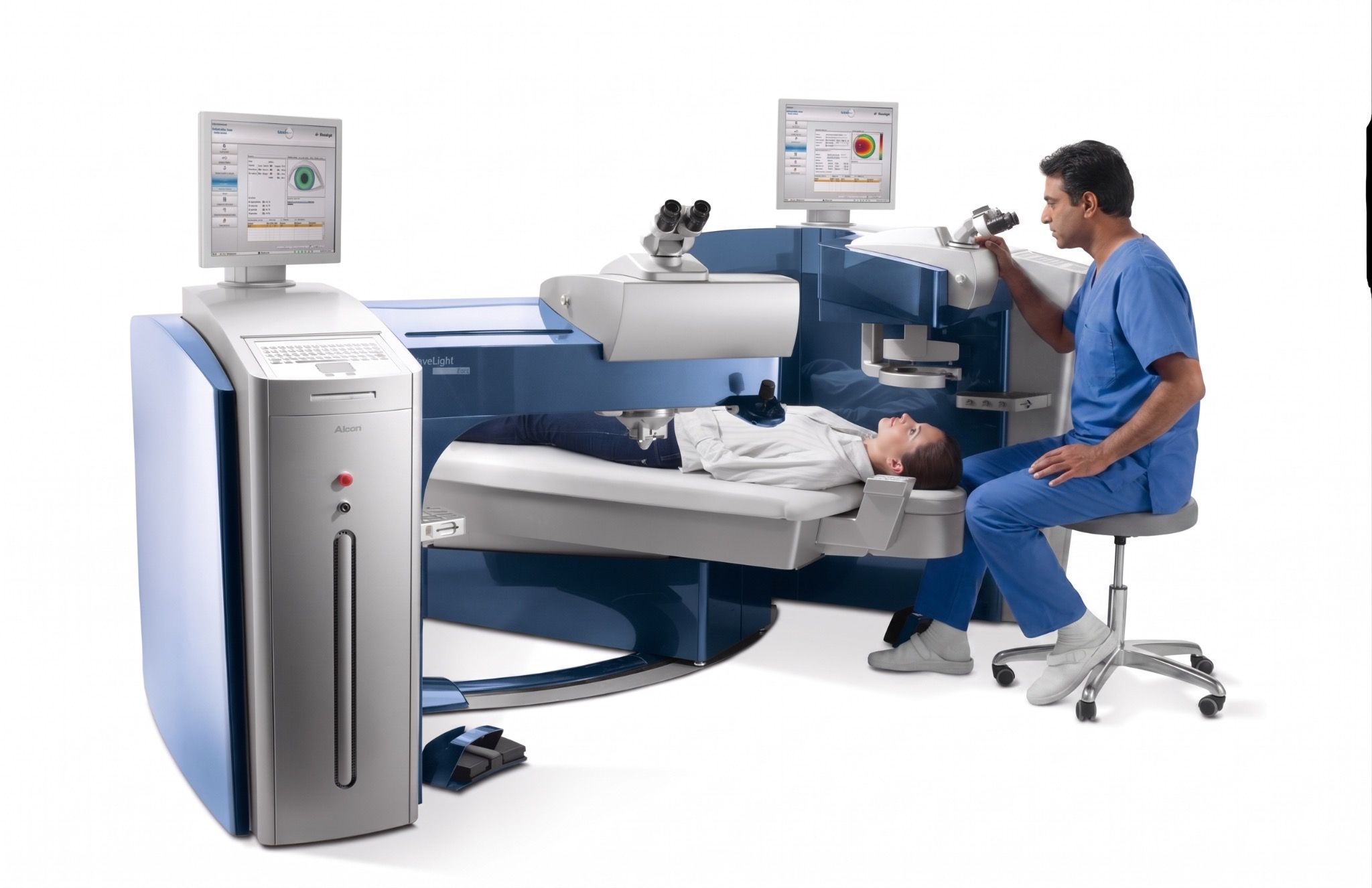
What Does the WaveLight Plus InnovEyes Assessment Actually Check?
WaveLight Plus InnovEyes goes far beyond your spectacle number. The candidacy process evaluates your whole-eye optical system using advanced diagnostic tools—creating a Digital Eye Twin that helps plan your treatment. Your eligibility depends on how light travels through your unique eyes, not just the numbers on your prescription slip.
During your free Advanced Eye Mapping session, the team examines:
- Your spectacle prescription (power and stability)
- Corneal thickness and shape
- Ocular surface health (like dry eye)
- Eye pressure and retina health
- Systemic factors (like diabetes, thyroid status)
- Age and maturity of your eyes
- Lifestyle and profession (e.g., pilots, defence, police)
This thorough approach means two people with the same glasses power might have different eligibility outcomes, depending on these deeper eye measurements. The final decision is made after a detailed surgeon review, using the data from all these checks. Read on to see how each factor matters.
Age: Why Maturity and Stability Matter
For most Indian adults, the minimum age for WaveLight Plus InnovEyes is 18 years. This is because your eye prescription (spectacle number) should be stable—meaning it hasn’t changed significantly (by more than ±0.50 dioptres) in the last 12 months. Younger patients’ eyes may still be changing, which can affect long-term results.
In some cases, a patient aged 19 from Delhi may have a stable -4.50 spectacle number for two years, while a 22-year-old from Mumbai might still be experiencing changes. The assessment also considers whether you are in a phase of study or preparation for competitive exams, where prolonged near work could influence your vision in the coming years.
There’s usually no strict upper age limit, but people above 40–45 are evaluated for presbyopia (age-related near vision changes) and lens health. If you have early cataracts or significant reading vision issues, other procedures may be more suitable. The key is that your eyes must be mature and your prescription stable—age alone doesn’t decide eligibility, but it’s an important starting point.
Spectacle Power and Prescription Range: Who Qualifies?
WaveLight Plus InnovEyes is designed for a broad range of spectacle numbers, but there are technical and safety boundaries.
- Generally, myopia (minus numbers) up to about -10.00 dioptres and hyperopia (plus numbers) up to +4.00 dioptres may be considered. Astigmatism (cylinder) up to about -6.00 dioptres is also possible in many cases.
- However, your final eligibility depends on how much corneal tissue must be removed to treat your number, and whether your cornea is thick and healthy enough for that correction.
For example, a 27-year-old in Bengaluru with -7.50D both eyes and stable vision may qualify after mapping, while a 24-year-old in Pune with -3.00D but an unusually thin cornea may not. Some patients with very high numbers might be better suited for ICL (implantable contact lens) or other procedures, which your surgeon will discuss if that’s the case.
Prescription range is only a starting filter—your full eye measurements guide the decision.
Corneal Thickness and Shape: The Foundation of Safety
Your cornea’s thickness and regularity are crucial for safe laser vision correction. WaveLight Plus InnovEyes uses high-resolution mapping to measure your cornea at thousands of points, checking:
- Is the cornea thick enough for safe tissue removal (usually >480–500 microns at the thinnest point)?
- Is the shape regular, without signs of keratoconus or ectasia risk?
- Are there scars, irregularities, or previous surgeries that might affect the outcome?
For example, a 30-year-old from Chennai with a -5.00D prescription and a healthy, 530-micron cornea may proceed, while a 32-year-old in Ahmedabad with similar power but a 445-micron cornea would be advised against the procedure for safety reasons. If your mapping shows borderline results, alternative treatments or additional tests might be recommended.
WaveLight Plus InnovEyes’ mapping is especially sensitive—it does not rely on cornea-only data but combines this with your entire visual pathway, making the assessment more robust. Learn more about this process on our Advanced Eye Mapping Explained page.
Ocular Surface and General Eye Health Checks
Having healthy eyes goes beyond numbers and corneal scans. During your candidacy assessment, your surgeon will evaluate:
- Ocular surface health: Chronic dry eye, severe allergies, or active infections may delay or rule out surgery until treated.
- Eyelid and tear gland health: Conditions like blepharitis (lid inflammation) may need management first.
- Eye pressure and retina: Screening for glaucoma risk, retinal thinning, or peripheral holes is part of every assessment.
For instance, a 29-year-old Hyderabad tech professional with mild seasonal allergies may be cleared after temporary treatment, but someone with unstable severe dry eye in Kolkata could be advised to postpone laser correction until the surface is healthier.
Your overall eye health is essential for safety and results—no shortcuts. If any treatable condition is found, the team will recommend a plan before considering surgery.
Systemic Health, Occupation, and Lifestyle Considerations
Systemic health issues and your daily life can also influence candidacy for WaveLight Plus InnovEyes.
- Systemic conditions: Well-controlled diabetes, thyroid issues, or autoimmune disorders may not automatically disqualify you, but require careful assessment. Poor control or certain medications can affect healing and outcomes.
- Pregnancy and breastfeeding: Women who are pregnant or breastfeeding should wait, as hormonal changes can temporarily alter vision.
- Profession and lifestyle: If you’re applying for aviation, defence, police, or certain government roles, eligibility requirements may change. Always check the latest official guidelines and discuss your career plans during your assessment.
- Active sports: If you play high-impact contact sports (like kabaddi or boxing), certain procedures like SMILE or PRK may sometimes be preferred over LASIK-type flaps. The surgeon will guide you based on your risks.
For example, a 35-year-old teacher in Jaipur with mild, well-controlled diabetes may be eligible after physician clearance, while a 28-year-old aspiring Air Force pilot in Lucknow should verify the latest medical requirements before proceeding. The assessment is always individualised—a free mapping session is your next best step.
What Happens if You’re Not Eligible? Other Safe Options
Not every patient is a candidate for WaveLight Plus InnovEyes—and that’s actually a sign of responsible medical care. If your assessment finds that WaveLight Plus is not the safest or most effective option, your surgeon will discuss alternatives tailored to your eye profile:
- ICL (Implantable Collamer Lens): Often suggested for very high numbers or thin corneas.
- PRK/TransPRK: Suitable for certain corneal shapes or surface issues.
- SMILE, SMILE Pro, SILK, or conventional LASIK: Each has unique benefits based on eye anatomy and lifestyle.
Every technology has its place, and the goal is always your safety and best possible outcome. Learn more about eligibility across other procedures on our main Candidacy page.
Your Next Step: Free Advanced Eye Mapping Assessment
The best way to answer "am I eligible for WaveLight Plus?" is to book a free, no-obligation Advanced Eye Mapping session at Centre for Lasik.
- The mapping is completely painless and takes about 20–30 minutes.
- You’ll receive detailed reports, a consultation with a surgeon, and a clear explanation of your personalised treatment plan—if you’re eligible.
- All this comes at no cost, with transparent pricing (₹49,999 per eye, ₹99,998 for both eyes; no-cost EMI from ₹4,167/month) if you choose to proceed.
Eligibility is always confirmed by thorough clinical evaluation, not online forms or calculators. Taking this step gives you the answers and confidence you need—without commitment.
Frequently Asked Questions
Wondering if You Qualify for WaveLight Plus InnovEyes?
Book your free, no-obligation Advanced Eye Mapping session for a personalised answer and full explanation from our experienced team.
+91-96677 70450Related Reading
What to Expect: Tests Before WaveLight Plus InnovEyes
Discover the key tests before WaveLight Plus. Learn what to expect during your Advanced Eye Mapping and how to prepare for your assessment day.
Read more Candidacy & EligibilityIs WaveLight Plus InnovEyes Safe? A Balanced Look at Safety and Risks
Is WaveLight Plus safe? Discover its safety profile, potential risks, regulatory approvals, and the latest innovations in eye tracking in India.
Read more Technology ExplainedAdvanced Eye Mapping: The Complete LASIK Eye Test Before Surgery
Discover what advanced eye mapping includes, why it's crucial before LASIK, and how your free assessment at Centre for Lasik determines suitability.
Read more