What to Expect: Tests Before WaveLight Plus InnovEyes
MBBS, MS (Ophthalmology), Fellowship in Phaco & Refractive Surgery · The Healing Touch Super Speciality Eye Care, New Delhi — Vikaspuri · Janakpuri
If you’ve booked your Advanced Eye Mapping at the Centre for Lasik, you may be wondering what exactly will happen on your assessment day before WaveLight Plus InnovEyes. This page breaks down each test, the equipment you’ll encounter, what the results mean, and why these steps are essential for your safety and best possible outcomes.
No two eyes are identical—so your spectacle number alone is never enough for modern laser vision correction. The WaveLight Plus InnovEyes pathway uses a combination of whole-eye measurements, digital scans, and ray-tracing analysis to build a complete map of your eyes. This ensures that your planned treatment is genuinely personalized, right from the very first test.
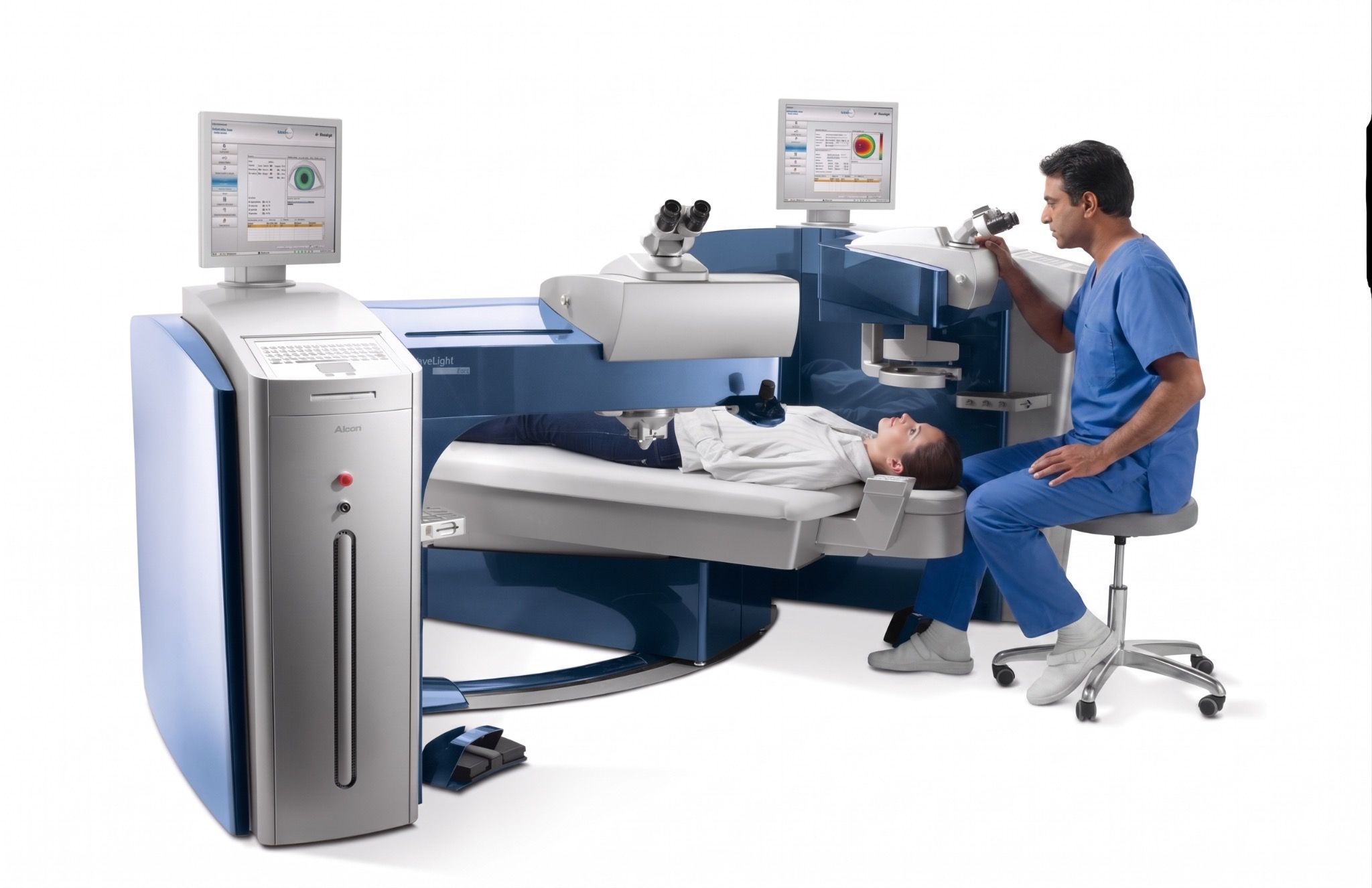
Why So Many Tests? The Role of Pre-Operative Assessment
WaveLight Plus InnovEyes relies on much more than your glasses prescription. Your vision depends on the way light travels through your entire optical system—this includes the cornea, lens, and even subtle internal aberrations. The pre-operative tests are designed to:
- Assess if your eyes are healthy and suitable for laser correction
- Detect dry eye or other conditions that could affect healing
- Measure corneal thickness, shape, and regularity
- Map the complete optical pathway using advanced instruments
- Rule out conditions like keratoconus or cataract that might need alternate management
For Indian patients, these tests are especially important as environmental, occupational, or genetic factors can influence suitability. If you’re a student, IT worker, or in professions like aviation or defence, the results also help ensure that your vision meets regulatory standards (see minimum age and eligibility rules).
Remember, not everyone will be eligible for WaveLight Plus—sometimes another procedure like SMILE, SILK, PRK or ICL may be safer or more suitable.
The Full List: LASIK Pre-Operative Tests for WaveLight Plus
On assessment day, expect a comprehensive series of painless scans and measurements. Here’s a typical lasik pre operative tests list for WaveLight Plus InnovEyes:
- Refraction (manual and digital): Checks your current spectacle number and stability
- Corneal topography: Maps the shape and curvature of your cornea in high detail
- Corneal tomography: Provides 3D imaging of corneal thickness (pachymetry)
- Wavefront aberrometry: Measures how light is distorted as it passes through your entire eye
- Scheimpflug imaging/Rotating camera scan: Detects subtle corneal irregularities or early disease
- Pupil analysis: Evaluates pupil size in different lighting—important for night vision outcomes
- Ocular biometry: Measures the length and structure of your eye, crucial for ray-tracing calculations
- Tear film assessment: Checks for dry eye which can affect both eligibility and recovery
- Intraocular pressure (IOP): Screens for risk of glaucoma
- Dilated retinal exam: Ensures the back of your eye is healthy
Some centres may use newer technologies like the Digital Eye Twin, which creates a virtual model of your eye for even more personalized planning.
What Each Instrument Measures—and Why It Matters
Every test on assessment day serves a unique purpose:
- Topographer & Tomographer: Reveal hidden corneal issues not visible in a routine exam. For example, early keratoconus—a condition more common in some Indian populations—can sometimes be picked up only by these scans.
- Wavefront Aberrometer: Detects subtle optical imperfections (‘higher-order aberrations’) that can’t be corrected with glasses but may affect night vision or clarity. These measurements help plan whether a personalized ray-tracing treatment would offer you a real benefit.
- Pupilometer: Pupil size can vary widely in Indian eyes. Larger pupils may increase risk of glare or halos, so the system adjusts treatment zones accordingly.
- Biometer: Eye length and lens position are vital for creating your individual Digital Eye Twin. This is especially important for those with high spectacle numbers or a family history of eye conditions.
- Tear Assessment: Unaddressed dry eyes can impact both comfort and results, so this is never skipped.
Each device is non-contact and painless, though a few may require you to focus on a target or keep your eye open for a few seconds. Most tests are repeated for quality assurance.
Contact Lens Holiday: Why and How Long to Stop Lenses Before Tests
Contact lenses can temporarily change the shape of your cornea, especially if worn daily or overnight. This can mislead the measurements and risk inaccurate treatment planning.
How long should you stop wearing contacts before your assessment?
- Soft lenses: Stop at least 3–7 days before your mapping appointment
- Rigid Gas Permeable (RGP) lenses: Minimum 2–3 weeks break is recommended
If you use coloured or cosmetic lenses, follow the same rules as for soft lenses. For those with long-term lens use, your doctor may advise an even longer break. If in doubt, call ahead and confirm with your clinic coordinator.
This ‘lens holiday’ ensures your cornea returns to its natural shape, making your Advanced Eye Mapping as accurate as possible. If you arrive having worn lenses too recently, some scans may need to be rescheduled for safety.
Your Assessment Day: What Happens, How Long, and When Results Are Ready
Anticipate that your assessment, including all tests, will take about 90 minutes to 2 hours. This time ensures each measurement is repeated for accuracy and includes time for your pupils to dilate for retinal checks.
Typical flow:
- Registration and brief medical history
- Visual acuity and refraction (with and without glasses)
- Series of scans on advanced diagnostic machines
- Tear film and dry eye evaluation
- Doctor review of all results and detailed counselling
You may be asked to wait between tests for your eyes to adjust, especially if dilating drops are used. Most results are available immediately, but some digital analyses (such as the virtual Digital Eye Twin) may be reviewed in a second consultation or telemedicine call.
Bring sunglasses, as your eyes may be light-sensitive after dilation. You can usually resume normal activities right after, but it’s best not to drive yourself home.
Understanding Your Personalized Report and Next Steps
After your assessment, your surgeon will review all the data and explain your eligibility. If you’re suitable for WaveLight Plus InnovEyes, you’ll see a personalized report, often including 3D maps, simulated visual outcomes, and the doctor’s recommendations. If another procedure (like SMILE, ICL, or PRK) is safer for your eyes, this will be explained fully.
You’ll have the chance to ask questions about cost (₹49,999 per eye, all-inclusive), payment options (including no-cost EMI from ₹4,167/month), and what to expect during recovery. Your report isn’t just a ‘pass/fail’—it’s a guide to the safest, most effective way to achieve your vision goals.
Remember: Some patients may achieve better than 6/6 vision, but this cannot be guaranteed and depends on individual eye characteristics. Your eligibility and likely outcomes will be discussed openly at this stage.
Frequently Asked Questions
Ready to Start? Book Your Free Advanced Eye Mapping
Get personalized answers and a complete eligibility assessment with our advanced diagnostics—at no cost and with no obligation.
+91-96677 70450Related Reading
Is WaveLight Plus InnovEyes Safe? A Balanced Look at Safety and Risks
Is WaveLight Plus safe? Discover its safety profile, potential risks, regulatory approvals, and the latest innovations in eye tracking in India.
Read more Technology ExplainedAdvanced Eye Mapping: The Complete LASIK Eye Test Before Surgery
Discover what advanced eye mapping includes, why it's crucial before LASIK, and how your free assessment at Centre for Lasik determines suitability.
Read more