WaveLight Plus vs LASIK: What Sets Them Apart?
MBBS, MS (Ophthalmology), Fellowship in Phaco & Refractive Surgery · The Healing Touch Super Speciality Eye Care, New Delhi — Vikaspuri · Janakpuri
If you’re searching for laser vision correction in India, you may have come across both LASIK and WaveLight Plus InnovEyes. Many patients wonder: is WaveLight Plus the same as LASIK, or is it something entirely different? Understanding this distinction is important when considering what’s right for your eyes and your lifestyle.
This page breaks down exactly how WaveLight Plus relates to LASIK, how it’s unique, and when you might benefit from each. We’ll use real-life examples and answer common questions Indian patients have about these procedures, helping you make an informed next step.
Is WaveLight Plus LASIK? Clarifying the Category
WaveLight Plus InnovEyes is a form of LASIK, but it’s not the same as standard LASIK. LASIK (Laser-Assisted In Situ Keratomileusis) is a category of laser vision correction that reshapes the cornea to reduce or eliminate your need for glasses. Procedures like conventional LASIK, wavefront-optimized LASIK, and now, WaveLight Plus, all fall under this broad category.
What makes WaveLight Plus different is its advanced planning technology. Instead of relying only on your spectacle number or basic corneal data, it builds a complete digital model of your eye—the "Digital Eye Twin"—using whole-eye optical measurements. This helps your surgeon plan a more personalised treatment that accounts for the unique way light travels through your optical system, not just through the front cornea.
In summary: WaveLight Plus is a specific, advanced type of LASIK, not something separate. Understanding this helps you compare it fairly with both conventional LASIK and other options like SMILE or PRK.
| Aspect | WaveLight Plus InnovEyes | Standard LASIK (Wavefront-Optimized) |
|---|---|---|
| Treatment Planning | Whole-eye measurements, digital eye twin, ray-tracing | Spectacle number & basic corneal data |
| Personalization Level | Highly personalized to your unique eye | Optimized for general population |
| Flap Creation | Femtosecond laser | Femtosecond laser |
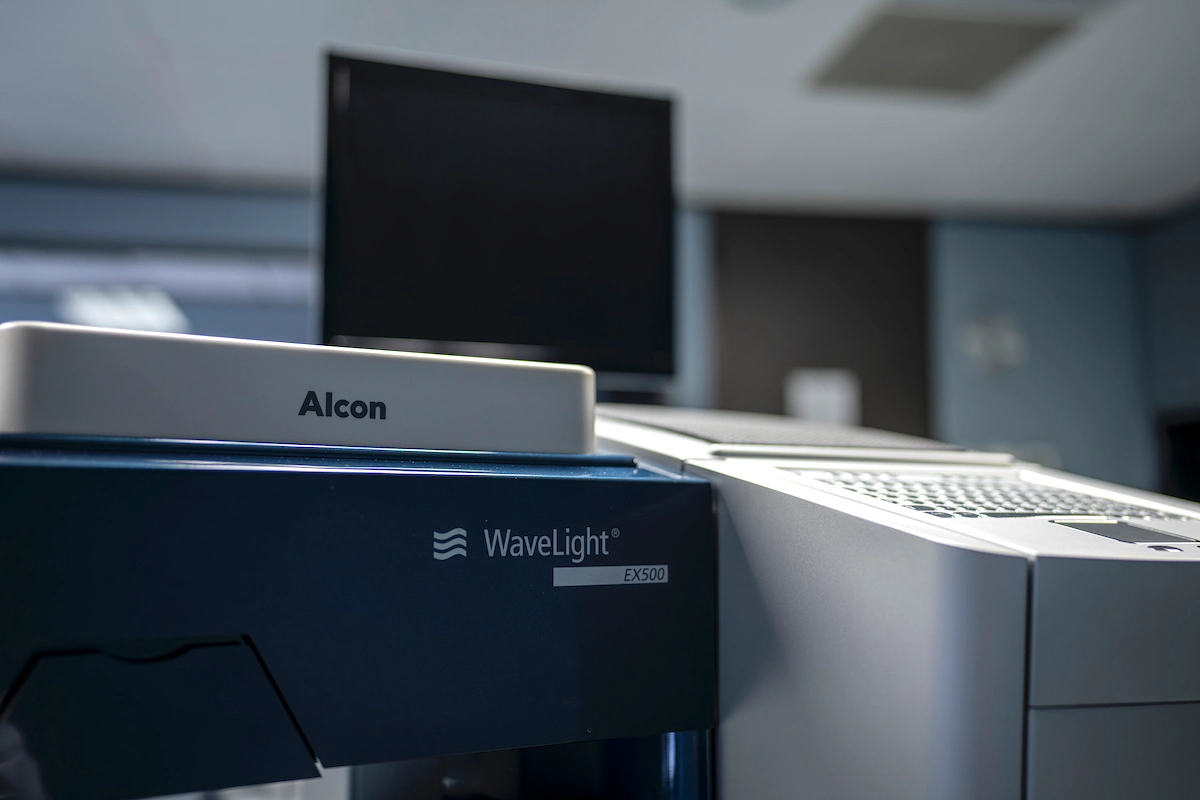
| Laser Platform | Alcon WaveLight EX500 with InnovEyes planning | Alcon WaveLight EX500 or similar |
| Surgery Time | 10–15 minutes/eye | 10–15 minutes/eye |
| Visual Goals | Aims to enhance clarity, contrast, night vision | Aims for 6/6 clarity, standard quality |
| Cost (per eye) | ₹49,999 (all-inclusive) | ₹30,000–₹45,000 (varies by clinic) |
| Who Benefits Most | Complex prescriptions, higher-order aberrations, prior LASIK | Standard prescriptions, regular corneas |
| Inclusions | Free mapping, 12 months follow-up, EMI options | Usually basic mapping, may charge extra for extras |
| Eligibility | Strict; detailed assessment required | Strict; detailed assessment required |
Key Differences in Planning: Standard LASIK vs WaveLight Plus
The main difference between LASIK and WaveLight Plus lies in how your treatment is planned.
- Standard/wavefront-optimized LASIK uses your spectacle prescription and basic corneal measurements to determine how much tissue to remove and where.
- WaveLight Plus InnovEyes goes further. After a free Advanced Eye Mapping assessment, it uses advanced diagnostic devices to capture:
- The exact shape and thickness of your cornea,
- How light passes through your entire eye (lens, cornea, and internal structures),
- Optical imperfections beyond your spectacle number (high-order aberrations).
This data is used to create a virtual, detailed model of your eye. The laser’s software then designs a correction pattern that is highly tailored to your individual optical system—aiming to address not just clarity, but also the quality of vision, like contrast and night vision.
For Indian patients with complex prescriptions, previous suboptimal LASIK, or unusual corneal shapes, this detailed approach can make a real difference. However, not every eye needs this level of customization, and your eligibility for WaveLight Plus will be decided after thorough mapping and consultation.
Flap Creation and Surgical Steps: What’s the Same, What’s New?
Both standard LASIK and WaveLight Plus LASIK involve creating a thin corneal flap, reshaping the underlying cornea with a laser, and then repositioning the flap. The surgical process is very similar:
- Flap creation: Done with a femtosecond laser for both procedures, ensuring precision and minimal tissue disruption.
- Laser reshaping: Standard LASIK uses a preset algorithm; WaveLight Plus uses a pattern derived from your digital eye model.
- Duration: Both surgeries are brief—typically 10–15 minutes per eye. WaveLight Plus may take slightly longer during planning, but surgical time is comparable.
Indian patients often ask if the newer technology means a more complex or riskier surgery. In reality, the risk profile is similar to modern LASIK, as both follow the same basic steps, but advanced planning aims to refine the result. Recovery timelines, precautions, and aftercare are also very similar for both.
Cost Difference and What’s Included
Cost is a major consideration for most Indian families. At the Centre for Lasik, WaveLight Plus InnovEyes is priced at ₹49,999 per eye (₹99,998 both eyes), which is higher than most standard LASIK procedures, which can range from ₹30,000–₹45,000 per eye depending on technology and city.
What do you get for the price delta?
- Free Advanced Eye Mapping (diagnostics that are often extra elsewhere)
- The personalised "Digital Eye Twin" treatment plan
- Surgery, 12 months of follow-up, and no-cost EMI options starting at ₹4,167/month
If you’re comparing prices in Delhi, Mumbai, Bengaluru or other major cities, ask clinics what’s included, as some may quote lower base prices but charge extra for mapping or follow-ups. Remember: the right procedure at the right centre can be a wise investment in your vision, but higher price alone does not always mean better outcome for every patient. Your suitability for WaveLight Plus is determined by factors beyond price.
Who Should Consider WaveLight Plus—and Who May Not Need It?
Not every patient needs the highest level of customization. WaveLight Plus InnovEyes tends to be most suitable for:
- Individuals with complex or high prescriptions (including high astigmatism)
- Those with previous vision correction surgery who want a refinement
- Patients concerned about subtle issues like night glare, halos, or contrast
- Eyes with irregular corneas or higher-order aberrations detected during mapping
On the other hand, conventional or wavefront-optimized LASIK remains a strong option for:
- Patients with stable, moderate prescriptions
- Regularly-shaped corneas
- No additional optical complexities on mapping
Your age, corneal thickness, dry eye status, occupation and even lifestyle (such as sports or computer use) all play a role in determining the best fit. For instance, a young IT professional in Hyderabad with mild myopia and healthy corneas may do very well with standard LASIK. But if mapping reveals unique optical imperfections, WaveLight Plus could be recommended. The starting point is always a detailed evaluation, like the free Advanced Eye Mapping session.
Visual Quality: Clarity, Night Vision, and Realistic Expectations
A common question is whether WaveLight Plus can deliver sharper or “better than 6/6” vision compared to standard LASIK. Some patients—especially those whose mapping shows higher-order aberrations—may experience improvement in aspects like night driving, contrast, or reduction of halos. However, no technology can promise perfect vision for every individual.
Many Indian patients do achieve very crisp vision after both types of LASIK. The difference is that WaveLight Plus aims to reduce subtle imperfections that sometimes limit quality of vision in challenging conditions, like dim lighting or long hours in front of a screen.
It’s important to set realistic expectations: some patients may achieve better than 6/6, but this depends on your unique eye characteristics, and outcomes vary. Discuss your personal goals and visual needs with your surgeon during your assessment.
Eligibility, Risks, and Regulated Professions
Eligibility for WaveLight Plus or any type of LASIK depends on multiple factors:
- Corneal thickness and shape
- Stability of your spectacle number
- Age, dry eye status, and overall eye health
- Occupation and lifestyle requirements
Certain professions in India—like aviation, defence, or police—have specific regulations about laser eye surgery. These rules may change and differ between agencies, so always check the latest official standards if your career depends on vision requirements. Both LASIK and WaveLight Plus carry rare but real risks, such as dry eye, glare, or infection. Your surgeon will discuss these during your assessment.
Not every patient is eligible for LASIK or WaveLight Plus. If you’re not a candidate, alternatives like SMILE, PRK, or ICL may be discussed. The most reliable way to know your options is to start with a thorough evaluation.
Frequently Asked Questions
Still Deciding Between LASIK and WaveLight Plus?
Compare all your options side by side, or book a free Advanced Eye Mapping assessment to learn what suits your eyes best.
+91-96677 70450Related Reading
What is WaveLight Plus InnovEyes? A Plain-Language Guide
Discover what is WaveLight Plus InnovEyes, how it personalises LASIK using advanced Alcon platform tech, and what Indian patients should know before deciding.
Read more Candidacy & EligibilityAm I Eligible for WaveLight Plus InnovEyes? Full Candidacy Checklist
Find out if you are eligible for WaveLight Plus. Explore key criteria like age, prescription, and cornea health in this comprehensive eligibility guide.
Read more Honest ComparisonsHow to Choose Between LASIK, SMILE, SILK & WaveLight Plus InnovEyes
Learn how to choose laser eye surgery in India. Compare LASIK, SMILE, SILK, and WaveLight Plus with 7 key questions to find your best option.
Read more Honest ComparisonsWaveLight Plus vs Femto LASIK: Key Differences for Indian Patients
Explore WaveLight Plus vs Femto LASIK for vision correction. Compare diagnostics, personalization, cost, and find out which option suits you best.
Read more Honest ComparisonsWaveLight Plus vs Contoura Vision: A Patient-Focused Comparison
Compare WaveLight Plus vs Contoura Vision for LASIK in India. Learn about topography-guided and ray tracing methods, suitability, and pricing.
Read more