Understanding Your InnovEyes Sightmap Eye Scan
MBBS, MS (Ophthalmology), Fellowship in Phaco & Refractive Surgery · The Healing Touch Super Speciality Eye Care, New Delhi — Vikaspuri · Janakpuri
If your eye doctor has recommended an InnovEyes Sightmap scan, you might be wondering what happens during this diagnostic session and why it’s such a crucial step before considering WaveLight Plus InnovEyes laser vision correction.
This page explains exactly what data the sightmap eye scan captures, how the InnovEyes diagnostic device works, and how your unique results are used to guide a truly personalised treatment plan. Whether you’re from Mumbai, Bengaluru, Delhi, or anywhere in India, knowing what this advanced scan involves can help you feel confident and informed as you explore your options.
What Is the InnovEyes Sightmap Eye Scan?
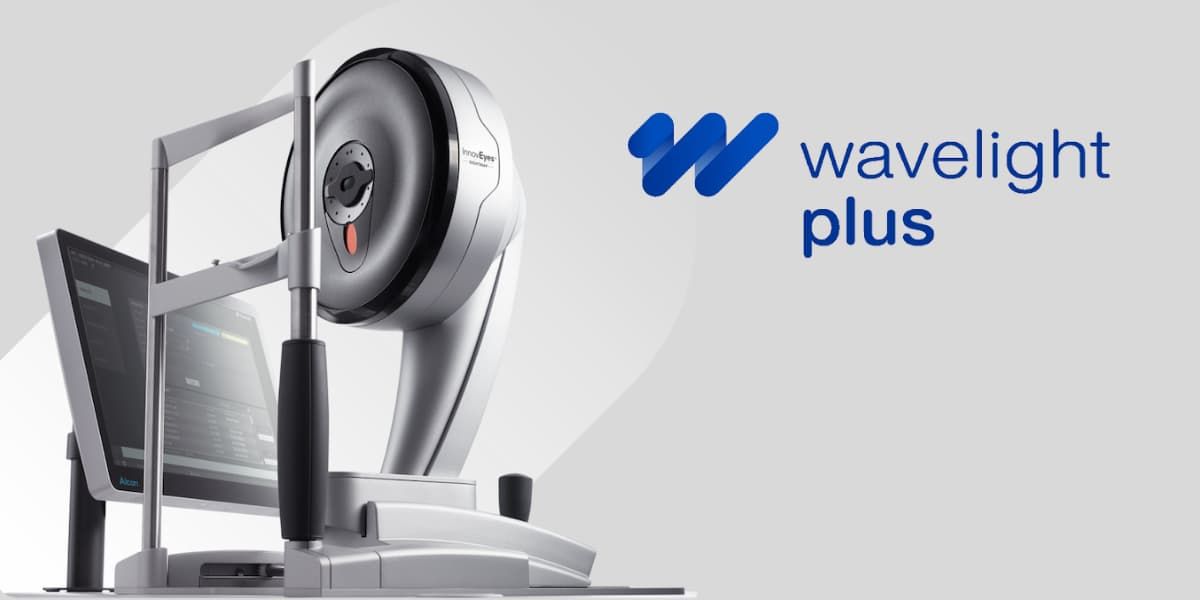
The InnovEyes Sightmap scan is a highly advanced diagnostic procedure performed using the InnovEyes diagnostic device. Unlike standard eye tests that mostly measure your spectacle number, the Sightmap scan maps how light travels through your entire optical system—including the cornea, lens, and internal optics.
In a single, non-contact session, the device captures thousands of data points from your eyes. This information allows the creation of your “Digital Eye Twin”—a detailed, virtual model of your unique eye structure. This is not just a map of your cornea, but a comprehensive profile that includes subtle imperfections (aberrations), the shape and thickness of your cornea, and the way light focuses inside your eye.
For Indian patients, this means a more holistic understanding of your vision—beyond just your prescription. The Sightmap is the basis for personalised laser plans, and it’s the first step before considering WaveLight Plus InnovEyes treatment.
Step-by-Step: What Happens During the Scan?
Most people find the Sightmap scan quick, painless, and comfortable. Here’s what to expect during your visit:
- You’ll be seated at the InnovEyes device and asked to keep your chin on a rest, looking at a gentle target light.
- The device uses safe, non-contact light to scan your eye surface and internal optical system. There is no physical touch—no drops or puffs of air are usually needed.
- Both eyes are scanned, usually taking about 5–7 minutes in total. Most patients report it feels like having a simple digital photograph taken.
The scan is suitable for a wide range of patients, but your eye care specialist will confirm if it’s appropriate for you based on medical history and examination. The results are available almost instantly, but the interpretation and suitability check are always done by an experienced surgeon.
What Does the Sightmap Report Look Like?
After your scan, you’ll receive a detailed Sightmap report. This isn’t just a simple printout of your spectacle number—it’s a multi-page summary of your eye’s unique optical fingerprint. Some of the key measurements include:
- Corneal topography: Maps the precise shape and curvature of your cornea, identifying even subtle irregularities.
- Wavefront analysis: Measures how light travels through your entire optical system, detecting higher-order aberrations that glasses alone do not correct.
- Pupil size and dynamics: Important for planning safe, personalised laser treatments, especially for those with large pupils.
- Corneal thickness (pachymetry): Essential for laser safety planning.
For many Indian patients, the visualisation is eye-opening—it shows how your whole-eye optics, not just your glasses number, contribute to your personal vision quality. If you choose to proceed, this report is securely integrated into your treatment plan.
How Sightmap Data Flows into Personalised Treatment Planning
The data from your InnovEyes Sightmap scan is not simply stored—it’s actively used to shape your laser procedure. Here’s how it works:
- Your “Digital Eye Twin” is created using the detailed measurements from the scan.
- Surgeons use this model, along with their clinical judgement, to plan a truly individualised laser vision correction plan.
- This planning considers not just your prescription, but also your unique corneal shape, internal aberrations, and other optical features detected by the sightmap eye scan.
The treatment plan is then programmed into the WaveLight Plus laser system. This integration helps avoid generalised or ‘one-size-fits-all’ corrections. Instead, your procedure is tailored to your specific optics—something especially valuable for patients with complex prescriptions, prior surgeries, or unique corneal patterns.
Curious about how this compares to conventional LASIK or SMILE? Visit WaveLight Plus vs LASIK for an in-depth look.
How Long Does the InnovEyes Diagnostic Session Take?
Time is valuable, and many Indian patients want a clear idea of what to expect. The InnovEyes diagnostic device is designed for efficiency. In most cases, the entire Advanced Eye Mapping session—including the Sightmap scan, preliminary vision tests, and a surgeon consultation—takes about 30 to 45 minutes in total.
The scan itself is usually complete in under 10 minutes for both eyes. There’s no recovery time needed; you can return to your regular activities immediately after. However, if your eyes are found suitable for WaveLight Plus InnovEyes, you’ll be invited to discuss your personalised plan in more detail, including safety, costs (see full pricing here), and the next steps.
Remember, this session is free and comes with no obligation. It’s a chance to get a comprehensive, scientific view of your eye health—whether you choose to proceed or not.
Is the Sightmap Eye Scan Safe? Are There Any Risks or Limitations?
The InnovEyes Sightmap scan is a non-contact, light-based diagnostic test with a strong track record of safety. There is no radiation, no incisions, and no discomfort for the vast majority of patients. However, certain eye conditions—such as dense corneal scars or uncontrolled eye movement—can sometimes make it difficult to get clear results.
It’s important to note that the scan is purely diagnostic. It does not guarantee suitability for WaveLight Plus or any other procedure. Actual eligibility depends on a complete eye health evaluation, which considers factors like corneal thickness, prescription stability, dry eye status, and overall health. For regulated professions such as aviation, defence, or police service, eligibility rules may change—always check current official standards.
If you have specific concerns (e.g., high minus or plus numbers, thin corneas, or previous surgeries), discuss these openly with your surgeon during your free Advanced Eye Mapping assessment.
Frequently Asked Questions
Ready to See Your Complete Eye Profile?
Book your free Advanced Eye Mapping session to experience the InnovEyes Sightmap for yourself. No obligation, just clarity.
+91-96677 70450Related Reading
Am I Eligible for WaveLight Plus InnovEyes? Full Candidacy Checklist
Find out if you are eligible for WaveLight Plus. Explore key criteria like age, prescription, and cornea health in this comprehensive eligibility guide.
Read more Honest ComparisonsWaveLight Plus vs LASIK: What Sets Them Apart?
Explore the difference between WaveLight Plus and LASIK. Learn how WaveLight Plus uses advanced eye mapping for personalised treatment. Compare now.
Read more Technology ExplainedAdvanced Eye Mapping: The Complete LASIK Eye Test Before Surgery
Discover what advanced eye mapping includes, why it's crucial before LASIK, and how your free assessment at Centre for Lasik determines suitability.
Read more Technology ExplainedWaveLight EX500 Excimer Laser: Engineering and Safety Explained
Discover the WaveLight EX500 excimer laser with 500 Hz ablation, advanced eye tracking, and safety features for precise laser vision correction.
Read more Technology ExplainedWaveLight FS200 Femtosecond Laser Flap Creation Explained
Explore the WaveLight FS200 femtosecond laser for precise, blade-free LASIK flap creation. Learn about safety, workflow, and planning in India.
Read more Technology ExplainedWavefront vs Topography Guided vs Ray Tracing LASIK: Which Customization Suits You?
Compare wavefront, topography guided, and ray tracing LASIK. Learn how each method customizes vision correction and which is best for your eyes.
Read more