Ray Tracing LASIK: Personalising Vision Correction with Advanced Optics
MBBS, MS (Ophthalmology), Fellowship in Phaco & Refractive Surgery · The Healing Touch Super Speciality Eye Care, New Delhi — Vikaspuri · Janakpuri
When considering laser vision correction, you may come across terms like "wavefront-guided" or "topography-guided" LASIK. But WaveLight Plus InnovEyes, available at Centre for Lasik, introduces a new level of personalisation through ray tracing LASIK. What does this actually mean, and how does it differ from earlier approaches?
For research-minded patients and engineers, the core difference lies in how treatment planning simulates and corrects your vision. Rather than relying on population averages or just your spectacle number, ray tracing LASIK evaluates exactly how light travels through every structure of your individual eye. This page explains the optics concept, why it matters in Indian clinical settings, and what current evidence shows about its impact.
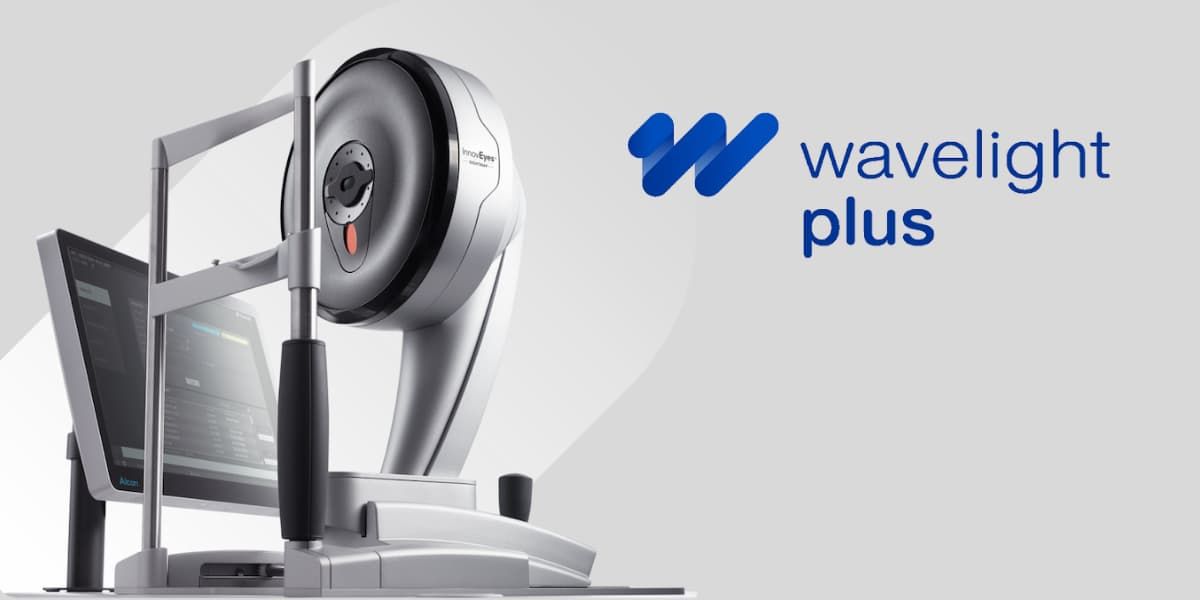
What Is Ray Tracing LASIK? The Optics Principle
Ray tracing is a method from optical engineering, now adapted for medical use, that simulates the exact path light takes as it travels through your eye. In WaveLight Plus InnovEyes, a highly detailed map of your eye is built using Advanced Eye Mapping. This data captures not just your corneal shape (like topography-guided LASIK) but also lens position, pupil size, anterior chamber depth, and more.
In essence, the system creates a Digital Eye Twin—a virtual model of your entire optical system. The software then traces thousands of light rays through this model, calculating precisely how each one bends, scatters, or focuses as it passes through your cornea and lens. This enables identification and correction of subtle optical imperfections unique to your eyes, beyond what standard measurements reveal.
For Indian patients, where genetic diversity in eye shape and lens characteristics is vast, this approach helps move beyond "average" corrections to truly personalised ablation profiles.
Ray Tracing vs Wavefront: Key Differences Explained
You may have heard of wavefront-guided LASIK, which measures how light waves deform as they exit your eye. While advanced, this captures only the result of optical errors, not their origins.
Ray tracing laser eye surgery instead builds a 3D model of your eye and simulates light's journey through each layer. This process:
- Models cornea, anterior chamber, lens shape and tilt, pupil dynamics.
- Simulates how thousands of rays would focus on your retina in real-world conditions (day and night, different pupil sizes).
- Identifies higher-order aberrations and their likely anatomical source.
Wavefront is like seeing the "output" of your eye as a black box; ray tracing lets your surgeon see inside the box and correct the root causes. This distinction is particularly useful for those with complex prescriptions, prior surgery, or those whose spectacle number never seemed to match their subjective blur.
To go deeper on this distinction, see our WaveLight Plus vs LASIK comparison.
How Ray Tracing Changes the Laser Ablation Profile
Traditional LASIK algorithms are based on population averages: they correct the most common sources of blur but cannot compensate for your eye's unique quirks. With ray tracing LASIK, your ablation profile (the map guiding the laser) is calculated from your personal Digital Eye Twin.
This means:
- Corrections are tailored not just to your spectacle number but to how your cornea and lens interact together.
- Subtle tilt in your lens, decentration of your pupil, or asymmetry in corneal shape can be directly accounted for.
- The laser removes tissue in a pattern unique to your eye (still respecting safety margins such as minimum corneal thickness).
For an Indian patient in Delhi with a stable -5.00D prescription but some visual disturbances at night, ray tracing may help address not just central blur but also peripheral light scatter or halo. However, not every patient will benefit equally; suitability depends on a detailed eye examination, including Advanced Eye Mapping.
Current Evidence and Clinical Experience
Clinical research is ongoing, but early studies and international experience suggest that ray tracing LASIK can address higher-order aberrations more precisely for certain patients, especially those with complex optical profiles. Some individuals may achieve sharper contrast or better night vision, though this cannot be promised for all.
It is important to note that conventional LASIK, SMILE, and other technologies like SILK or PRK remain excellent options for many. The added complexity of ray tracing is most beneficial for patients whose visual complaints go beyond simple refractive error. In Indian clinics, we see growing demand for such personalised approaches, but your actual results will depend on your initial eye measurements, age, corneal thickness, and other factors assessed during the free Advanced Eye Mapping session.
Published evidence (as of 2024) shows promising trends but also highlights that no technology can guarantee a specific result. Individual factors, including healing response, will always play a role.
Who Might Benefit Most? Case Scenarios for Indian Patients
Some typical scenarios where ray tracing LASIK may be considered:
- Patients whose spectacle number never seems to yield crisp vision—perhaps due to subtle lens tilt or irregular corneal shape.
- Those with night glare or halos that standard correction doesn't fully resolve.
- Patients with complex, high-cylinder (astigmatism) prescriptions, or those dissatisfied after prior refractive surgery (like standard LASIK or PRK).
For example, a young engineer in Bengaluru with a stable prescription but persistent nighttime driving issues may benefit from a more detailed analysis. Alternatively, a pilot in Mumbai should check current DGCA requirements, as regulatory rules can affect eligibility regardless of technology.
The only way to know if ray tracing LASIK is suitable for you is through a detailed eligibility assessment. See if you’re eligible or book your free Advanced Eye Mapping.
What to Expect: Assessment, Pricing, and Next Steps
Your journey with WaveLight Plus InnovEyes begins with a free Advanced Eye Mapping session at Centre for Lasik. This painless diagnostic visit involves no commitment and helps determine your eligibility for ray tracing LASIK. Our team will measure your entire optical system, not just your spectacle number, to build your Digital Eye Twin.
If you are eligible and choose to proceed, the current all-inclusive price is ₹49,999 per eye (₹99,998 for both eyes). No-cost EMI starts from ₹4,167 per month. The package includes surgery, a 12-month follow-up, and all necessary scans. For many, this cost is comparable to or lower than premium spectacle lens expenses over several years.
Still comparing options? Explore cost details here and compare LASIK, SMILE, SILK and WaveLight Plus. Suitability depends on your individual measurements, occupation, and lifestyle.
Frequently Asked Questions
Curious if ray tracing LASIK is right for your unique eyes?
See how your Digital Eye Twin can guide a personalised treatment plan—compare your options or book a free, no-obligation assessment.
+91-96677 70450Related Reading
Am I Eligible for WaveLight Plus InnovEyes? Full Candidacy Checklist
Find out if you are eligible for WaveLight Plus. Explore key criteria like age, prescription, and cornea health in this comprehensive eligibility guide.
Read more Honest ComparisonsWaveLight Plus vs LASIK: What Sets Them Apart?
Explore the difference between WaveLight Plus and LASIK. Learn how WaveLight Plus uses advanced eye mapping for personalised treatment. Compare now.
Read more Technology ExplainedAdvanced Eye Mapping: The Complete LASIK Eye Test Before Surgery
Discover what advanced eye mapping includes, why it's crucial before LASIK, and how your free assessment at Centre for Lasik determines suitability.
Read more Technology ExplainedDigital Eye Twin LASIK: How Virtual Eye Models Guide Personalised Correction
Explore Digital Eye Twin LASIK and how its virtual eye model delivers precise, personalised laser vision correction for optimal results.
Read more Technology ExplainedWhat Happens During 3D Eye Mapping Before LASIK?
Learn how 3D eye mapping before LASIK works, what the eye mapping test involves, and why advanced corneal mapping is essential for laser vision correction.
Read more Technology ExplainedInnovEyes LASIK Explained: What Sets This Technology Apart
Curious about InnovEyes LASIK? Learn how this technology uses digital eye mapping and ray tracing to personalize your laser vision correction in India.
Read more