Digital Eye Twin LASIK: How Virtual Eye Models Guide Personalised Correction
MBBS, MS (Ophthalmology), Fellowship in Phaco & Refractive Surgery · The Healing Touch Super Speciality Eye Care, New Delhi — Vikaspuri · Janakpuri
If you’re researching advanced laser eye surgery in India, you might have come across the term Digital Eye Twin LASIK. This technology is changing how surgeons plan and personalise laser vision correction, especially on platforms like WaveLight Plus InnovEyes.
But what does creating a 'digital twin' of your eye actually mean? How does it go beyond just your spectacle number or standard LASIK mapping? On this page, we’ll break down what a computational eye model is, which measurements go into it, and why it matters for your treatment plan. We’ll also discuss its benefits, as well as its limitations—so you can make an informed decision alongside your eye surgeon.
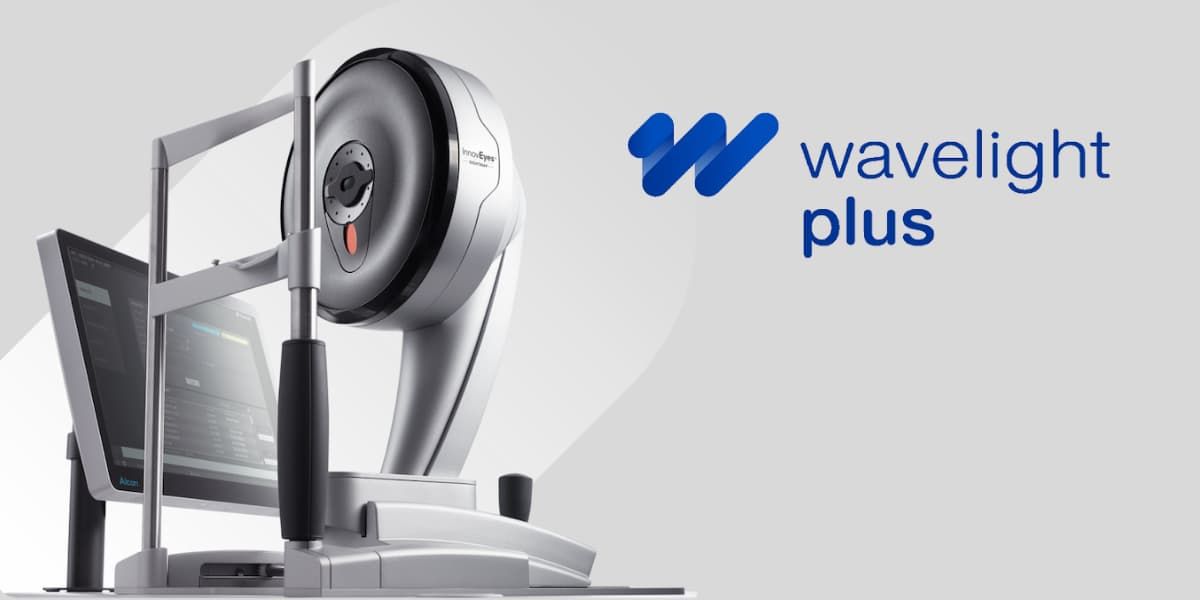
What Is a Digital Eye Twin and Why Does It Matter?
A Digital Eye Twin is a sophisticated virtual model that represents the unique optical properties of your eye. Unlike traditional LASIK planning—which often relied mainly on your spectacle prescription and basic corneal measurements—the Digital Eye Twin approach integrates data from your entire optical system.
For Indian patients, this means the technology looks far beyond just the “number” on your glasses. It considers how light travels through your cornea, lens, pupil, and even accounts for subtle optical imperfections (aberrations) that can impact sharpness, contrast, and vision quality in real life. This model is generated using specialised diagnostic scans in your free Advanced Eye Mapping session.
Why does this matter? Because every eye is as unique as a fingerprint. By digitally reconstructing your eye’s true optical pathway, the surgeon can plan a laser treatment tailored to your individual characteristics, potentially improving the precision and balance of your vision correction.
Which Measurements Feed the Virtual Eye Model?
Building an accurate Digital Eye Twin depends on gathering detailed measurements from multiple advanced instruments:
- Axial Length: This measures the length of your eye from front to back. Axial length is crucial for understanding how light is focused inside your eye, especially for people with high myopia (minus numbers) or hyperopia (plus numbers).
- Corneal Topography and Tomography: These scans map the shape and thickness of your cornea in three dimensions. They help detect irregularities like keratoconus or subtle distortions that could affect surgery planning.
- Wavefront Aberrometry: This technology measures the way light actually travels through your entire optical system. It identifies higher-order aberrations—subtle imperfections that glasses typically don't correct.
- Pupil Size and Dynamics: The size and behaviour of your pupil in different lighting conditions can affect quality of vision, especially at night.
For example, a 27-year-old software engineer in Bengaluru with a -6.00D prescription might show higher-order aberrations not visible on a basic eye power test. By capturing these with wavefront aberrometry and integrating them into the digital model, the surgeon can design a more personalised treatment plan.
How Surgeons Use the Digital Eye Twin for Planning
Once your virtual eye model is built, the surgeon and the WaveLight Plus InnovEyes software use it to simulate how different laser corrections would affect your unique optics. This enables ray-tracing-based planning—where the system virtually traces the path of light through your eye’s digital twin, predicting how your vision could change after different treatment options.
Practical steps include:
- Reviewing your complete digital map alongside your spectacle number and medical history
- Identifying the optimal ablation pattern (tissue removal shape) that should best balance sharpness, contrast, and visual comfort
- Adjusting for factors like corneal thickness and shape to minimise risk and maximise tissue preservation
For instance, in a patient from Mumbai with borderline thin corneas, the surgeon may use the digital model to select a treatment plan that achieves the target correction while staying within safe tissue removal limits. This process supports both safety and customisation, helping the surgeon make fully informed decisions.
The Limits of Digital Twin Eye Surgery: What Patients Should Know
While Digital Eye Twin LASIK represents a leap forward, it’s important to understand its boundaries. The digital model is only as good as the measurements and data quality. For example, dry eye, recent contact lens wear, or unsteady fixation during scans can affect accuracy.
Additionally, the digital twin does not account for every biological variable:
- It cannot predict how your cornea will heal, which varies from person to person
- It does not eliminate the risks of glare, halos, or dry eye after surgery—these can still occur in some cases
- It cannot ensure eligibility for regulated professions (aviation, defence, police); you must check current rules for your career
Ultimately, while digital twin eye surgery provides more data for planning, surgical outcomes depend on both technology and your individual eye biology. That’s why a detailed eligibility assessment and consultation with a qualified ophthalmologist remain essential.
Who Might Benefit—and How to Take the Next Step
Digital Eye Twin LASIK may be particularly useful for patients who:
- Have higher spectacle numbers or complex prescriptions
- Notice issues with night vision or contrast despite correct glasses
- Have been told their corneas are borderline or have irregular shapes
- Want the most personalised approach available on the WaveLight platform
If you’re considering laser vision correction in India, the first step is a free Advanced Eye Mapping session at the Centre for Lasik. This assessment is painless and includes the very scans that build your digital eye twin—no obligation to proceed. Pricing for WaveLight Plus InnovEyes is ₹49,999 per eye (₹99,998 both eyes), with no-cost EMI options from ₹4,167/month and 12-month follow-up included. For those comparing options like SMILE, PRK, ICL, and Contoura Vision, use our comprehensive comparison guide or see if you’re a candidate to get started.
Frequently Asked Questions
Ready to See if Digital Eye Twin LASIK Fits You?
Begin with a free, no-obligation Advanced Eye Mapping session to build your unique eye profile and discuss your options with a laser vision specialist.
+91-96677 70450Related Reading
Am I Eligible for WaveLight Plus InnovEyes? Full Candidacy Checklist
Find out if you are eligible for WaveLight Plus. Explore key criteria like age, prescription, and cornea health in this comprehensive eligibility guide.
Read more Honest ComparisonsWaveLight Plus vs LASIK: What Sets Them Apart?
Explore the difference between WaveLight Plus and LASIK. Learn how WaveLight Plus uses advanced eye mapping for personalised treatment. Compare now.
Read more Technology ExplainedAdvanced Eye Mapping: The Complete LASIK Eye Test Before Surgery
Discover what advanced eye mapping includes, why it's crucial before LASIK, and how your free assessment at Centre for Lasik determines suitability.
Read more Technology ExplainedWhat Happens During 3D Eye Mapping Before LASIK?
Learn how 3D eye mapping before LASIK works, what the eye mapping test involves, and why advanced corneal mapping is essential for laser vision correction.
Read more Technology ExplainedPersonalized Laser Vision Correction: From Standard to Ray-Traced Planning
Discover personalized laser vision correction options in India. Learn about standard, wavefront, topography-guided, and ray-traced treatments.
Read more Technology ExplainedRay Tracing LASIK: Personalising Vision Correction with Advanced Optics
Explore how ray tracing LASIK uses precise light simulation for personalized vision correction. Learn the science and benefits of this advanced technique.
Read more